
Earache After Swimming: What Should You Do?© Felix Gmünder |
These are the possible causes
Pain of the ear may have several causes with swimmers. In general it is an infection or inflammation of the outer ear or ear canal. Less often it is associated with an inflammation of the middle ear which is more serious (s. figure), an abscess in the ear canal or mastoiditis which is an inflammation of the bone behind the ear.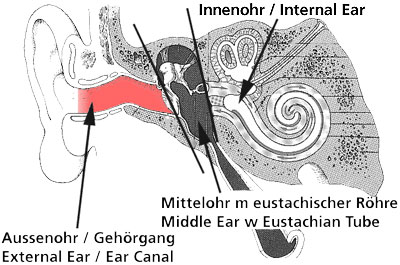
Following swimming (but also after taking a shower or a bath) water often sits in the ear canal for a long time. The wet skin can get infected with bacteria. Within hours this results in itching or painful ears. If the initial inflammation does not fade off spontaneously, it can escalate to great pain.
The ears are prepared to get wet: ear wax does not offer a good environment for growth of micro-organisms unless it is removed or wet for prolonged time. In addition, the production of ear wax enables the ear to get rid of skin debris and dirt. If you swim in contaminated water this can foster an infection. Swimmers who spend many hours per week in the pool have to take into account that the water can wash away the ear wax which makes the ear canal dry and more prone to infections.
If itching and pain increases when you move the ear (by pulling gently the lobe) an inflammation of the inner ear is very likely. An inflammation of the middle ear always hurts the same, regardless if you pull the lobe or not. Normally, you don't get fever with an inflammation of the ear canal.
Tip 1: Go to the doctor
Best you see a doctor right away, preferably an ear specialist, unless you are very familiar with what is going on.It would be a pity to miss an inflammation of the middle ear or a mastoiditis. The physician will examine the ear and if applicable clean the canal from any objects, extra wax, dirt, and discharge depending on how much it hurts. The inflammation is in general treated with a wick. This is a tightly rolled up piece of cotton soaked with treatment (e.g. antibiotic, pain-, and anti-inflammatory medication). Alternatively instead of a wick ear drops are used.
It is very dangerous to miss a beginning infdection of the middle ear, or ven a mastoiditis, an infection of the bone behind the ear. This can lead to deafness. If you have a middle ear infection, it is useless to treat the outer ear or ear canal. The eardrum separates the outer ear from the middle ear, which means any medication applied from outside cannot reach the middle ear. If the middel ear is affected, oral medication such as antiobiotics and pain killers are normally prescribed.
You have to be prepared to stop swimming and showering of the head for some days. Thus be sensible and prevent swimmer's ear as follows:
Tip 2: What can I do to prevent earache?
Following swimming or showering try to get the water out of the ear canals by turning your hard to the side and gently pulling the ears. Never put a Q-tip or cotton swab into the ears: you just push the wax (and maybe skin debris) deeper into the canal. In addition, the protective barrier is removed. You risk that an ear plug is built up which promotes an inflammation. Q-tips and any other objects put into the ears are the most common cause of ear canal infections.Instead use a solution of 1/2 water with 1/2 vinegar to rinse your ears. This solution is excellent for skin protection. In the slight acidic environment left after rinsing (pathogenic) bacteria cannot grow. The natural acidic skin milieu in the ear canal is restored.
Tip 3: Best and most economic: Vinegar-water-solution (50/50).
Get a small flask with a rubber pipette in a drug store (10 to 20 millilitres or about half a fluid ounce) and fill it with half vinegar (just one you would take to prepare your salad dressing) and tap water. Dry the outside of the ear (towel, Kleenex) while keeping your head to the side. Then fill your ear with the vinegar-water-solution keeping your head to the other side. If the solution does not fill the canal try pulling the ear and the lobe gently. Dry the ear from outside as mentioned before. This advice is most effective and economic according to ear-specialists.Solutions made of vinegar and rubbing alcohol are also fine (50/50). Consider, however, that this solution may remove protective wax. An advantage is that this solution has disinfective properties.
Many drugstores and pharmacies offer these as so called eardrops for divers. Normally they are made of acetic acid, isopropylalcohol, and an emulsifier such as Tween-20®.
Try to find out what is best for your ears. However, if an inflammation is under way consult a doctor as quickly as possible. It is generally not a good idea to use earplugs to keep the water out of the ears. Like Q-tips and cotton swabs they may push wax and skin debris back into the ear and trap water behind it.
For swimmers who are prone to recurrent infection of the ear canal, a swimcap may be helpful. It keeps your ears warm and is of great value for cold-sensitive people.
If you happen to have recurrent infections, you will learn what is sensible to do and what is not...