Home swimclinic.ch
Swimming Tips and Advice German

An Explanation of Correct Posture and Body Balance When Swimming the Front Crawl

© Felix Gmünder

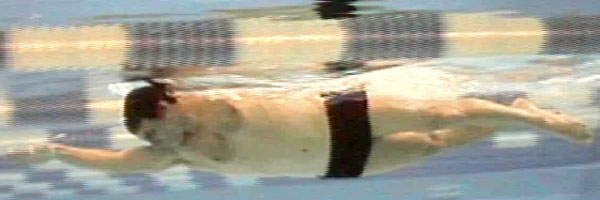
swimmer with good body position and balance

Holding your head up affects your position in the water

Looking ahead may feel right, but see how it drives your hips and legs down, making it harder to balance and kick.
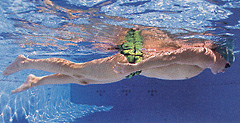
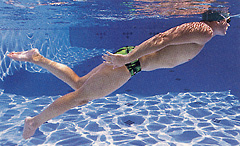
Good Balance - Gute Wasserlage Bad Balance - Schlechte Wasserlage

As soon as you drop your head in line with your spine, your hips come up and your kick is more effective. Hint: Look at the bottom of the pool and lean with your chest in the water. You have the feeling of swimming downhill!

What's wrong with looking ahead?

Many coaches and instructors told you to look ahead while swimming freestyle and keep the water at your hairline or even your eyebrows. Maybe you've also heard coaches say, "Put your head down and go for it," in the last stretch of a race. And now it is said to keep your head and chest always down. With all that conflicting information, it's no wonder you're confused.

Here, then, is some clarity. The key element of efficient swimming is balance and body position. Dropping your head to its natural position in line with your spine immediately pops your hips to the surface and makes your kick more efficient. Many swimmers think swimming is hard work: No pain no gain. They concentrate on getting tired. But the reason they're killing themselves is because they can't swim efficiently. They could swim as fast with less effort.

Keep head, hips, and legs in line

This reduces drag by dimensions. Keeping your head and shoulders down (s. image to the right) allows you to keep your legs up without kicking. It's also natural and effortless the way you are on dry land. If you're looking down, you can press your chest into the water, which is how your whole body is supported as you swim. You don't need your pullbuoy any more. If you're still skeptical, try it for yourself. Swim one lap looking at the wall you're heading toward and a second lap with the top of your head aimed at it instead. It may take a little practice old habits die hard but you'll probably find yourself rolling and stroking more easily than you ever have. You'll also relax the muscles in your neck that used to hold your head up.

Explanation for the technically oriented

Swimming flat on the water surface and producing as little resistance as possible [Posture and Floating] reduces drag enormously. Drag in the water increases with velocity to the power of two and the power needed with the power to the three! This means if you want to double swimming speed you need 8-fold as much power. Logically enough, working on reducing drag is more efficient than increasing swimming power!!