
Side Stitches When Swimming: Causes and Remedies© Felix Gmünder |
The cause is not fully understood
Everyone who does sport – and even those who don’t – dreads the pain beneath the ribcage: a stitch. Everyone is familiar with the pain, and yet medicine still has no definitively proven explanation for the phenomenon. The only certainty is that physical exertion is the trigger and that it mostly affects untrained individuals. Swimmers and runners are most commonly affected. (Reference: Morton, D., Callister, R. Exercise-Related Transient Abdominal Pain (ETAP). Sports Med 45, 23–35 (2015). https://doi.org/10.1007/s40279-014-0245-z)
Possible causes under discussion include:
- Circulatory disorders of the spleen
- Stretching of the connective tissue between the bowel and the diaphragm following overly large meals
- Overloading of the diaphragm (lack of training)
The spleen as the cause: This organ is located in the upper left abdomen and, amongst other things, serves to store blood. When we exert ourselves physically, our muscles require more blood. The spleen contracts and forces more blood into the bloodstream. This causes pain. However, not everyone experiences a stabbing pain in the left side of their abdomen. This explanation is the least likely.
The second and third explanations – a connection with the diaphragm – might be more likely to be correct, or could play an important role. It is well known that side stitches occur more frequently after large meals than on an empty stomach. The organs in the abdomen are suspended by a system of ligaments, which is attached, amongst other places, to the diaphragm. If you have eaten too much or too heavily, these organs pull the diaphragm downwards whilst running. The catch, however, is this: even long-standing marathon runners suffer from side stitches – even on an empty stomach. And swimmers, too, are plagued by side stitches on an empty stomach, even though these abdominal organs cannot exert any pull on the diaphragm whilst in the swimming position.
That is why most experts today tend to believe that a lack of oxygen or excessive strain on the diaphragm causes the pain. Incorrect breathing technique or weak abdominal muscles lead to cramping of the diaphragm, which we perceive as a stitch. It is also known that people who are unfit suffer from stitches more frequently than those who are fit, and that this occurs less frequently with increasing age.
What can be done about it?
To prevent this, sports medicine specialists recommend exercising no sooner than two hours after eating, and training the abdominal muscles and diaphragm through abdominal breathing. Untrained individuals should ensure they start at a low intensity and increase it only gradually. This allows the respiratory muscles to adapt gently to the exertion and helps prevent side stitches.
And what should you do if you still get a stitch?
Then slow down a little and try to breathe deeply and regularly into your abdomen. It’s best to raise your arms as you breathe in. As you breathe out, lower your arms and bend your upper body forwards. If you breathe in and out deeply whilst tensing your abdominal muscles, your diaphragm will also stretch and the cramp will ease.
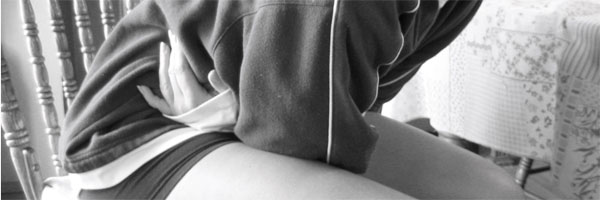
Or you can simply press your hand against the spot on your stomach that hurts. It really helps to release this pressure as you breathe out. Massage the area to relieve the pain.