
Swimming Goggles: Which Type is Best and How to Prevent Fogging?© Felix Gmünder |
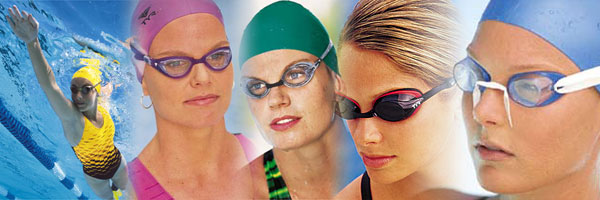
There is no such thing as the ‘best’ swimming goggles!
A good fit depends on how well the goggles sit in or on the eye sockets. Depending on the shape of the eye sockets, cheap goggles are often better than expensive ones. To try them on: If the distance between the two lenses (the length of the nose bridge) is set correctly, the lenses should ‘suck on’ after being pressed lightly; in other words, the goggles must stay firmly and comfortably in place on or in the eye sockets even without the head strap. The head strap essentially prevents them from coming off after the starting dive and the push-off.Fogging
Some swimming goggles have a ‘No Fog’ or ‘Anti-Fog’ coating on the inside (as stated on the packaging). These are generally better than ‘standard’ ones. However, there are also some with a coating that still fog up. Incidentally, fogging isn’t necessarily a question of price. The best remedy for fogging is: saliva!! Lick the inside of the goggles with your tongue before use and put them on without rinsing.After a few lengths (vision is cloudy at first), visibility improves; then rinse with a little pool water. If necessary, lick the inside again and repeat the procedure. Goggles ‘treated’ in this way get better and better at preventing fogging after a few training sessions (about a dozen). Very cheap goggles (the ‘Swedish goggles’ type) are sometimes absolutely brilliant. If you find the rim of these too hard, there are now some available (Arena, Nike, TYR, Eyeline, View) with a slightly softer rim; the ‘lens’ is made of clear plastic. With these, you can see just as well as with a good pair of diving goggles.
Use a glasses case or any plastic box
Care
Never touch the “lenses” with your fingers; only touch the frames. This prevents annoying and sometimes permanent marks caused by dirt, skin oils or sun cream. Rinse thoroughly after swimming. Do not rub dry. Store the goggles in a plastic bag or tray (to protect against scratches) – open these at home so that the goggles can dry completely (to prevent fungal growth). Some goggles can be used for up to a year despite daily use. Proper care is important if you find a pair of goggles that both fit well and hardly fog up at all.After a few weeks, or if the lenses become cloudy, rinse the goggles thoroughly with lukewarm water and soak them in a liquid bathroom or kitchen cleaner to remove traces of grease and limescale. The cleaner should contain citric acid to remove limescale, and non-ionic, anionic or cationic surfactants (detergents) for cleaning, but no abrasive components. Products containing ‘vinegar’ or ‘acetic acid’ are too harsh. After a few minutes, gently rub the lenses with a soft cloth, rinse the goggles with lukewarm water and leave them to dry.
Swimming goggles with prescription lenses or contact lenses
If you wear glasses, you have two options:- Some manufacturers offer models with prescription lenses.
- The other option is to wear weekly contact lenses. You can wear them for a longer period – up to three months – if you only use them for swimming and look after them properly. If they get lost in the shower or whilst swimming, the loss is bearable.