
Overtraining in Swimming© Felix Gmünder |

The most relevant facts about overtraining
Overtraining occurs when an athlete is training vigorously but performance is not getting better but deteriorates. In spite of yearlong research, it is still not possible to diagnose overtraining reliably with a simple test. One has to rely on a list of criteria and the analysis of the recent training history of the athlete.
Low cortisol and catecholamine values and reduced or no response of free cortisol to exercise are one of the signs of overtraining. However, it is not reliable and consistent. Latest research suggests that overtraining is best described as a systemic inflammation reaction.
The therapy consists of total rest or low intensity workout in a different sport. Regeneration can take as much as weeks and months. Prevention includes careful planning, performance monitoring of training and competition performance, and communication with coach and physician.
Information to physicians and researchers:
A. Angeli, M. Minetto, A. Dovio, and P. Paccotti (2004). The overtraining syndrome in athletes: A stress-related disorder. J. Endocrinol. Invest. 27:603-612.
Background of Overtraining
60 years ago Hans Seyle noted that stress could not only protect but also damage the body. Since then the mechanisms responsible for the negative stress reaction produced by excessive physical stress have been examined carefully. It was found that the underlying mechanisms are associated with the neural and hormone system, in particular the hypothalamic-pituitary-adrenal axis. Sport can result in a positive health effect if the load for the body does not exceed individual tolerance. The positive effect includes positive mood control, increased immune function, weight control, protection against increased weight, diabetes, cancer and cardiovascular disease, osteoporosis, just to name a few effects. Sport is the base for a healthy life style and prolonged life without disease and ailment.
Diagnosis of Overtraining
In spite of the yearlong research it is still not possible to make out warning signs of overtraining early enough. Even the diagnosis of an acute overtraining is not simple. One has to rely on a list of criteria and symptoms. The trainings diary and development of recent training and competition performance as well as observations made by the coach are important information to discuss the issue with a sports physician. Table 1 shows the major symptoms and signs of overtraining.
Table 1. The major signs and symptoms of overtraining
Alteration to physiological functions and adaptation to performance
- Decreased performance
- Decreased muscular strength
- Muscle soreness and tenderness
- Reduced toleration of loading
- Prolonged recovery
- Chronic fatigue
- Headache
- Sleep-wake cycle abnormalities
- Gastrointestinal disturbances
- Alteration of sexual functions (oligo-, amenorrhoea)
- Changes in blood pressure and heart rate
Psychological symptoms
- Feelings of depression
- General apathy
- Emotional instability
- Fear of competition
- Loss of appetite
- Excitation and restlessness
- Phlegmatic behaviour and inhibition
Immunological dysfunction
- Increased susceptibility to and severity of bacterial infections
- Reactivation of herpes viral infections
- Decreased functional activity of neutrophils
- Decreased total lymphocyte counts
- Decreased production and secretion of immunoglobulins
Biochemical alterations
- Decreased hemoglobin, serum iron and ferritin
- Negative nitrogen balance
- Increased urea levels
- Increased uric acid production
- Decreased glutamine concentrations
- Mineral depletion (Zn, Co, Al, Mn, Se, Cu, etc.)
- Lack of or reduced increase of stress-related hormones after exercise
- Low free testosterone
- Decreased free testosterone to cortisol ratio of more than 0.3
Causes of Overtraining
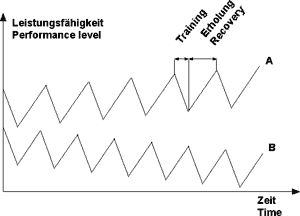 Overtraining is caused by continuous and repeated training units that are to intense and/or too extensive in combination with too little rest. Graph (B) in figure 1 shows the decline in performance over time schematically. Time for recovery is too short.
Correctly designed training and recovery lead to improved performance over time (graph A).
Latest research shows that overtraining is a whole-body inflammation. Typically, hormone-type substances, known as cytokines that are released during inflammation, increase in overtrained athletes. If you are interested in this topic there is a lecture that explains this in more details ("Sports and Immunology").
Exercise at moderate intensity is thought to have an anti-inflammatory effect (Petersen and Pedersen, 2004). Overtraining, however, is possibly the result or the symptom of a generalised inflammation. Tiny damage to muscle and connective tissue known as microtrauma provoke this systemic inflammatory reaction.
Prevention of Overtraining
Prevention includes careful planning, performance monitoring of training and competition performance, and communication with coach and physician.
Therapy of Overtraining
The therapy of overtraining consists of total rest. It can be considered to continue to workout at a very low level, perhaps in a different sport. Recovery can take weeks and months.
More Information on Overtraining
- A. Angeli, M. Minetto, A. Dovio, and P. Paccotti (2004). The overtraining syndrome in athletes: A stress-related disorder. J. Endocrinol. Invest. 27:603-612
- A. M. W. Petersen and B. K. Pedersen (2004). The anti-inflammatory effect of exercise. J. Appl. Physiol. 98:1154-1162
- Overtraining syndrome: a guide to diagnosis, treatment, and prevention